
Content:
- 1. Why Invest in a Coffee Franchise?
- 2. Types of Coffee Franchise Models
- 3. How Much Does a Coffee Franchise Cost?
- 4. How Profitable Are Coffee Franchises?
- 5. Who Qualifies to Own a Coffee Franchise?
- 6. Randy’s Donuts Franchise Snapshot
- 7. Build a Coffee Business with Randy’s Donuts
- 8. Is Randy’s Donuts Right for You?
- 9. Frequently Asked Questions About Coffee Franchises
- 9.1. What coffee franchise is the most profitable?
- 9.2. Which coffee franchise has the highest ROI?
- 9.3. Can you own a coffee franchise without restaurant experience?
- 9.4. What is the difference between a coffee franchise and a coffee shop franchise?
- 9.5. What should I look for when comparing coffee franchise opportunities?
- 9.6. Are coffee and donut franchises a good investment pairing?
Coffee is one of the few products people buy every day without much thought. That consistency has helped make coffee franchises one of the strongest categories in quick-service restaurants, with loyal customers, predictable morning traffic, and opportunities to build recurring revenue.
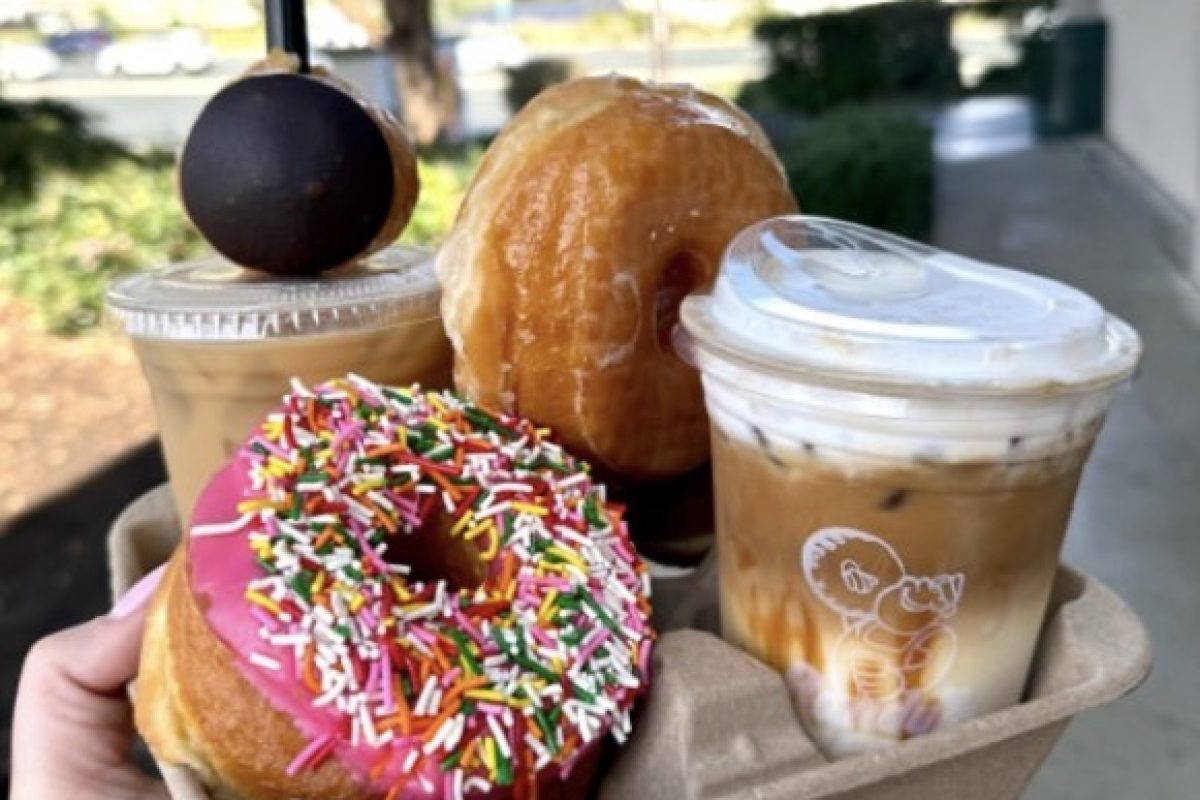
The opportunity becomes even more compelling when coffee is paired with fresh food. Donuts, pastries, and breakfast items naturally increase average ticket size while giving customers another reason to stop in. Instead of relying solely on beverage sales, many of today’s leading coffee franchises create a broader experience that encourages repeat visits throughout the week.
This guide compares the most common coffee franchise models and explains why brands that combine premium coffee with fresh food, like Randy’s Donuts, continue attracting experienced multi-unit investors.
Why Invest in a Coffee Franchise?
Coffee franchises appeal to entrepreneurs because they combine an everyday consumer habit with a proven business model. Whether customers are commuting to work, meeting friends, or grabbing an afternoon pick-me-up, coffee creates consistent demand that many other restaurant concepts struggle to match.
Investment requirements vary by brand and store format. Smaller drive-thru concepts may require investments beginning around $200,000, while larger café concepts can exceed $800,000. Franchise fees commonly range between $30,000 and $40,000. Scooter’s Coffee, for example, requires approximately $250,000 in liquid capital and a $500,000 net worth, while larger national brands often require significantly more.
Beyond the financial investment, coffee creates one of the highest-frequency purchasing habits in foodservice. While someone may visit a burger restaurant once a week, many coffee customers visit several times each week, and often every weekday. That recurring traffic allows franchisees to build loyal customer relationships, introduce seasonal beverages, and increase revenue through complementary food offerings.
Franchising also removes much of the uncertainty that comes with starting a business independently. Instead of creating systems from scratch, franchisees receive established operating procedures, training, approved vendors, and ongoing marketing support. Many of today’s fastest-growing brands have expanded beyond coffee alone by offering fresh donuts, pastries, breakfast sandwiches, and other grab-and-go items that naturally increase average order value.
Some of the biggest advantages of investing in a coffee franchise include:
- Repeat customers: Coffee is part of many people’s daily routine, creating dependable traffic and opportunities to build long-term customer loyalty.
- Proven operating systems: Franchisors provide established procedures, training, and support that help reduce the learning curve for new owners.
- Higher average tickets: Pairing premium coffee with fresh food encourages customers to purchase more during each visit.
- Multiple revenue opportunities: Many brands serve breakfast, snacks, specialty beverages, and seasonal menu items that generate sales throughout the day.
Types of Coffee Franchise Models
Not every coffee franchise operates the same way. Choosing the right model affects your startup costs, staffing requirements, real estate needs, and long-term growth potential.
Drive-Thru Coffee Franchises
Drive-thru coffee concepts are built around convenience and speed. Customers order from their vehicles, receive their drinks quickly, and continue with their day. These locations typically require smaller buildings, fewer employees, and lower operating costs than traditional cafés.
Drive-thru franchise models often perform especially well near commuter routes, business districts, schools, and suburban neighborhoods where customers prioritize convenience over extended in-store visits.
Kiosk and Express Coffee Franchises
Kiosks and express locations operate inside high-traffic venues such as airports, shopping centers, grocery stores, universities, and hospitals. Their smaller footprint generally reduces construction costs, although success depends heavily on the amount of customer traffic generated by the host location.
These formats often offer streamlined menus that focus on beverages and a limited selection of food items.
Full-Service Café Franchises
Traditional coffee cafés provide seating, expanded food menus, and an environment designed to encourage customers to stay longer. These locations typically require larger real estate investments and additional staffing but can generate higher average sales by serving breakfast, lunch, specialty beverages, and baked goods throughout the day.
Many café concepts also become gathering places for local communities, creating loyal repeat customers beyond the morning rush.
Hub-and-Spoke Multi-Unit Coffee Franchises
Some franchise systems take a different approach by using a centralized production model.
Rather than preparing food at every location, a central production facility, known as the hub, supplies fresh products to multiple smaller spoke locations. These spokes may include drive-thrus, kiosks, in-line stores, or smaller retail locations throughout a market.
Randy’s Donuts has built its franchise opportunity around this hub-and-spoke strategy. Instead of opening a single neighborhood donut shop, franchisees develop a central production hub that supplies multiple spoke locations. This operating model helps maintain product consistency while creating operational efficiencies that can support long-term multi-unit growth. According to the Franchise Disclosure Document, development agreements generally begin with five locations, making the concept particularly attractive for experienced franchise investors.
How Much Does a Coffee Franchise Cost?
Coffee franchise investments vary considerably depending on the brand, store format, equipment requirements, and long-term development strategy. Understanding these investment tiers can help narrow your search before comparing specific franchise opportunities.
Low-Cost Coffee Franchise Investments
Smaller kiosks, express locations, and compact drive-thru concepts typically represent the lowest investment tier. These models require less real estate and fewer employees, making them attractive for entrepreneurs with smaller budgets or those entering franchising for the first time.
The trade-off is that these concepts often have more limited menus and fewer opportunities to increase average ticket size through expanded food offerings.
Mid-Range Coffee Franchise Investments
Traditional drive-thru locations and smaller café concepts generally represent the most common entry point for franchise ownership. Many brands fall within the $300,000 to $600,000 investment range, although costs vary depending on construction, equipment, and local real estate.
These concepts typically balance manageable startup costs with opportunities for long-term growth.
Premium Multi-Unit Coffee Franchise Investments
Some franchise systems are designed from the beginning for larger-scale development rather than single-store ownership.
Randy’s Donuts is one example. Instead of selling individual locations, the franchise utilizes a five-store hub-and-spoke development model built around one centralized production facility. According to the Franchise Disclosure Document, the initial franchise fee for the hub location is $35,000, while the estimated investment for the complete five-store development is approximately $2.5 million. This structure is designed for investors looking to build an entire market rather than operate a single coffee shop.
How Profitable Are Coffee Franchises?
The profitability of a coffee franchise depends on several factors, including location, operating efficiency, product mix, and the strength of the brand. While no franchise can guarantee financial performance, certain business models consistently create more opportunities to increase revenue and manage costs.
One of the biggest drivers of profitability is customer frequency. Coffee is part of many people’s daily routine, which creates predictable traffic and repeat business. Brands that successfully pair premium coffee with fresh food often generate higher average tickets because customers are purchasing more than a single beverage.
Several factors can influence long-term performance:
- Location matters: High-visibility sites near commuter routes, business districts, and retail centers often experience stronger traffic.
- Food increases average tickets: Fresh donuts, pastries, and breakfast items naturally increase what customers spend during each visit.
- Operating model affects labor: Drive-thru and hub-and-spoke concepts can improve operational efficiency compared to preparing every product at every location.
- Scale creates efficiencies: Multi-unit operators can spread fixed costs across several locations while building brand recognition throughout an entire market.
The overall concept also plays an important role. Brands built solely around beverages may have lower average tickets than concepts that combine coffee with fresh food. A customer purchasing both a premium coffee and a handmade donut typically spends more than someone purchasing coffee alone. Those additional purchases can have a meaningful impact over thousands of customer visits each year.
Who Qualifies to Own a Coffee Franchise?
Every franchise has its own qualifications, but most evaluate candidates based on financial resources, business experience, and long-term growth potential.
Typical qualifications include:
- Financial strength: Most brands require minimum liquid capital and net worth thresholds before approving franchise candidates.
- Business or management experience: While some concepts welcome first-time owners, others prefer candidates who have managed teams, operated businesses, or overseen multiple locations.
- Growth mindset: Many franchisors are looking for owners interested in expanding beyond a single location.
- Operational commitment: Depending on the brand, franchisees may be expected to serve as owner-operators or oversee professional management teams.
Randy’s Donuts is designed primarily for experienced investors who want to develop multiple locations rather than operate a single neighborhood coffee shop. According to the Franchise Disclosure Document, qualified candidates generally have approximately $1 million in net worth and at least $300,000 in liquid capital. Because the franchise utilizes a five-store hub-and-spoke development model, it is best suited for entrepreneurs interested in building long-term market presence rather than opening one standalone location.
Randy’s Donuts Franchise Snapshot
For investors evaluating premium coffee franchise opportunities, here’s a quick look at what sets Randy’s Donuts apart.
- World Famous Since 1952
- Five-store hub-and-spoke development model
- Initial franchise fee: $35,000
- Estimated investment: Approximately $2.5 million for a five-store development
- Average gross sales: $1,026,789 across eleven reporting affiliate-owned and franchised locations during the 2025 Measured Period
- Premium coffee program paired with handmade donuts
- Comprehensive training and ongoing operational support
- Proprietary recipes and approved vendor network
Build a Coffee Business with Randy’s Donuts
If you’re looking for more than a traditional coffee shop franchise, Randy’s Donuts offers a differentiated opportunity built around one of America’s most recognizable brands.
Since 1952, Randy’s has become known for its iconic rooftop donut, handmade donuts, and proprietary recipes that have earned loyal customers for more than seven decades. Today, the brand pairs those signature products with a premium coffee program that encourages repeat visits and higher average ticket sizes throughout the day.
Rather than focusing on single-store ownership, Randy’s utilizes a scalable hub-and-spoke operating model. Franchisees develop one central production hub that supplies multiple satellite locations, including drive-thrus, kiosks, and in-line shops. This structure helps maintain product consistency while improving operational efficiency as franchisees expand throughout their territories. According to the Franchise Disclosure Document, development agreements generally begin with five locations.
Franchisees also receive extensive support before and after opening. Training covers baking procedures, operations, customer service, marketing, management, and brand standards. Ongoing guidance helps operators maintain consistency while growing their businesses.
Another feature that distinguishes Randy’s Donuts is its approach to franchisee success. Rather than generating revenue through affiliated equipment or supply sales, Randy’s states that it does not require franchisees to purchase equipment or products from affiliated companies. Instead, the brand’s long-term success is tied to helping franchisees grow profitable businesses through ongoing royalty revenue.
According to the 2026 Franchise Disclosure Document, the average gross sales for eleven reporting affiliate-owned and franchised locations reached $1,026,789 during the 2025 Measured Period. The initial franchise fee is $35,000, while the estimated investment for the complete five-store development is approximately $2.5 million.
For entrepreneurs interested in combining premium coffee with one of America’s most recognizable donut brands, Randy’s Donuts offers a scalable coffee-and-donut shop franchise opportunity designed for long-term multi-unit growth.
Is Randy’s Donuts Right for You?
Randy’s Donuts may be an excellent fit if you:
- Want to build multiple locations instead of operating a single coffee shop.
- Have experience managing teams, businesses, or multi-unit operations.
- Value an established brand with more than 70 years of recognition.
- Like the idea of pairing premium coffee with fresh, handmade food products.
- Meet the brand’s financial qualifications.
- Are interested in building a long-term business with opportunities for market expansion.
Frequently Asked Questions About Coffee Franchises
What coffee franchise is the most profitable?
Profitability depends on location, operating efficiency, product mix, and how well the business is managed. Concepts that pair premium coffee with fresh food often generate higher average ticket sizes than beverage-only concepts.
Which coffee franchise has the highest ROI?
No franchisor can guarantee a return on investment. Instead of focusing solely on ROI, compare each franchise’s investment requirements, operating model, brand recognition, training, and long-term growth strategy before making a decision.
Can you own a coffee franchise without restaurant experience?
Many coffee franchises provide comprehensive training and welcome first-time business owners. However, larger multi-unit concepts may prefer candidates with previous management or business experience.
What is the difference between a coffee franchise and a coffee shop franchise?
The terms are often used interchangeably. Both refer to franchise businesses built around coffee sales, although some coffee shop franchises also offer expanded food menus, seating, drive-thru service, or specialty baked goods. Brands like Randy’s Donuts combine premium coffee with handmade donuts to increase customer visits and average order value.
What should I look for when comparing coffee franchise opportunities?
Compare the total investment, franchise fees, training and support, brand recognition, available store formats, financial qualifications, and long-term growth model. Some brands are designed for single-store ownership, while others, like Randy’s Donuts, are built for multi-unit market development.
Are coffee and donut franchises a good investment pairing?
Coffee and donuts naturally complement one another. Customers frequently purchase both during the same visit, increasing average ticket size while encouraging repeat business. That’s why many successful franchise concepts, including Randy’s Donuts, have built their business models around offering premium coffee alongside fresh, handmade donuts.