Content:
- 1. Key Takeaways
- 2. What Is a Multi-Unit Franchise?
- 3. Single-Unit vs. Multi-Unit Franchise: Key Differences
- 4. How Does a Multi-Unit Franchise Work?
- 5. Types of Multi-Unit Franchise Agreements
- 6. Benefits of Multi-Unit Franchising
- 7. Risks and Challenges to Weigh
- 8. What a Multi-Unit Franchise Costs: Fees and the FDD
- 9. How the Hub-and-Spoke Model Works in Multi-Unit Franchising
- 10. Is Multi-Unit Franchising Right for You?
- 11. FAQs About Multi-Unit Franchises
- 11.1. What is the difference between a multi-unit franchise and a master franchise?
- 11.2. What are the four types of franchises?
- 11.3. How many units do you need to be a multi-unit franchisee?
- 11.4. Do you have to open all your locations at once?
- 11.5. Do multi-unit franchisees pay a franchise fee for every location?
- 12. Ready to Build a Multi-Unit Portfolio With an Icon?
Many franchise owners hit the same wall. One location can only serve so many customers in a day, and your income tops out with it. That’s usually when owners start asking what a multi-unit franchise is and whether it’s the right way to grow.
This guide gives you the plain definition, the agreements behind multi-unit growth, the costs, and the risks. It ends with a real multi-unit franchise example: the hub-and-spoke model behind Randy’s Donuts franchising. The fee numbers in this guide come straight from our April 29, 2026 Franchise Disclosure Document.
Key Takeaways
- You can own many locations of one brand without ever signing an area development agreement.
- Per FRANdata, about one in five franchisees now runs more than half of all U.S. franchise locations.
- At Randy’s, the development fee is nonrefundable, so your opening schedule has real money attached.
- Growth changes your job: you stop running shifts and start managing the people who do.
- You must get the FDD at least 14 days before you sign or pay anything, so use that time.
What Is a Multi-Unit Franchise?
A multi-unit franchise is an arrangement where one franchisee owns and operates two or more locations of the same franchise brand. The owner can add units one at a time or sign a development agreement that sets how many units open by each deadline.
The IFA franchising terms glossary calls a multi-unit franchisee "a franchisee who owns more than one franchise but may not have an area development agreement." In other words, a signed development deal isn’t required.
This kind of ownership now accounts for most franchise business. In fact, the FRANdata 2026 franchising outlook reported that 19.3% of franchisees control 58.8% of all franchise locations. Put simply, about one in five franchisees runs more than half of the units.
Why Multi-Unit Ownership Keeps Growing
Growth usually starts with an owner who already runs one store well. The IFA 2026 outlook announcement says successful single-unit franchisees are "increasingly reinvesting in additional locations, transitioning into multi-unit operators." They already know the system, so adding units is the next step.
Some brands now build their whole offer around these experienced growth buyers. Randy’s Donuts, for example, seeks five-store development models from multi-unit franchise owners, with exceptions in some cases.
Single-Unit vs. Multi-Unit Franchise: Key Differences
Once the definition is clear, the next question is what actually changes when you go from one door to several. The table below compares the two paths side by side.
|
Factor |
Single-Unit Franchise |
Multi-Unit Franchise |
|---|---|---|
|
Investment |
One build-out and one initial fee |
Several build-outs, often with a development fee paid up front |
|
Owner role |
Often works in the shop day to day |
Manages managers and tracks results across units |
|
Territory |
Tied to one site |
Often a defined development area, such as a city or county |
|
Fees |
Full initial fee for one unit |
Added units may carry a lower fee (Randy’s: $25,000 vs. $35,000) |
|
Growth potential |
Capped by one location’s sales |
Grows with each unit you open |
|
Risk |
All revenue depends on one site |
Spread across sites, but more capital is at stake |
The biggest change in that table is the owner’s role. With one shop, you can fix a problem by walking into the kitchen. With five, you can’t be everywhere, so your job shifts from operator to executive.
That means hiring strong managers and reading their numbers every week. Your results in multi-unit franchise ownership depend on the systems your team follows when you’re not in the building.
How Does a Multi-Unit Franchise Work?
Those differences show up most clearly in the day-to-day operations. Most multi-unit franchise opportunities start with two signatures: a franchise agreement for your first unit and a development agreement that grants rights to open more. Each later unit then gets its own franchise agreement when you’re ready to open it.
Next comes real estate. Under Randy’s Development Rights Agreement (DRA), the franchisee finds and selects sites before Randy’s reviews and accepts them. Your territory is typically one or more cities or counties, sized around how many shops you plan and what the local market can support.
After sites are approved, you open on a schedule. The development agreement sets your obligations, and Randy’s may terminate the DRA if they aren’t met. Starting your site search early helps protect those rights.
As units open, you build a management layer. Plan for a manager in each shop, and as the group grows, consider someone who oversees several shops. Moving payroll and purchasing to one central team can save your time.
Franchisor help matters most during this build-out. Randy’s trains up to five people for the first shop at no added fee.
Its opening team can also be on-site for up to two weeks. Owners also get a confidential operations manual of about 281 pages detailing every aspect of the business, including training and franchise support.
Types of Multi-Unit Franchise Agreements
The schedule and territory come from the contract you sign. The contract type matters. Most multi-unit growth follows one of three paths: an area development agreement, a master franchise agreement, or adding units one at a time.
Each path asks for a different level of commitment and gives you a different level of control. Knowing them before you talk to a brand helps you ask better questions.
Area Development Agreement
An area development agreement gives a multi-unit owner the right to open a set number of locations in a defined territory by set dates. The IFA calls this owner an area franchisee: someone who commits to developing an agreed number of locations within a defined period and territory. The IFA adds that an area franchisee usually pays an area fee for those rights.
Each unit still gets its own franchise agreement. Randy’s version is the DRA, which covers a minimum of two shops. The development fee is $35,000 (the first shop’s fee) plus a $12,500 deposit for each additional shop.
You pay the remaining $12,500 when you sign each additional shop’s Franchise Agreement. On a five-shop deal, that works out to $85,000 at DRA signing: $35,000 plus four $12,500 deposits. Each added shop’s fee then totals $25,000 once you pay the balance.
Master Franchise Agreement
A master franchise works differently. A master franchisee can sell franchises to sub-franchisees in its territory. It typically splits the franchise fee and royalties with the franchisor.
That makes the master franchisee act like a regional franchisor, sometimes called a sub-franchisor. Because duties and fee splits vary by contract, have a franchise attorney review any master or development agreement before you sign.
Incremental (Add-On) Growth
The simplest path is to buy units one at a time, with no development agreement. You commit less money up front, but no territory is reserved for you, so another owner could claim the next good site.
This route suits owners who want to prove themselves on one or two shops before committing to more. If those shops run well, you can then talk with the brand about a development deal.
Benefits of Multi-Unit Franchising
With the agreements mapped, here’s why operators accept those commitments. The first benefit is an economy of scale. One management team and one local marketing plan can cover several shops, so fixed costs spread across more sales.
Added units can also cost less to franchise. Randy’s charges $35,000 for the first shop and $25,000 for each second or later shop.
Owning several units spreads your risk. If road work slows one shop for a month, the others still bring in cash while you wait it out.
More locations also open more ways to earn. Randy’s hub-and-spoke model lets one hub support catering and event orders alongside counter sales, and you can read more about franchises with multiple revenue streams. A group of operating units is also a bigger asset to sell or pass on later than a single store.
Risks and Challenges to Weigh
The same scale that drives the benefits also raises the stakes. The first risk is capital. You’re committing to several build-outs, and Randy’s multi-unit investment estimate for a domestic hub-and-spoke project is approximately $2.5 million over multiple years.
Your development fee is also on the line. Randy’s development fee is nonrefundable, and the franchisor may terminate the DRA if you miss your development obligations. That puts pressure on you to find sites and open on time, even when real estate is tight.
Staffing gets harder with each unit. Every shop needs trained people who follow the same recipes and standards. One weak location can also drain cash and attention from the rest of the group.
Territory rules need a close read too. Item 12 of Randy’s FDD states the DRA is not an exclusive territory. While the DRA is in effect, Randy’s won’t open shops physically inside your territory, except in Restricted Venues (non-traditional sites the FDD defines).
What a Multi-Unit Franchise Costs: Fees and the FDD
Most of those risks can be sized before signing, and the FDD is where you size them. The Franchise Disclosure Document (FDD) is the legal disclosure a franchisor gives buyers before a sale.
Federal rules set the timing, as the FTC franchise buying guide explains. "You must receive the document at least 14 days before you are asked to sign any contract or pay any money."
The FTC also notes that the FDD has 23 numbered Items. When you compare brands for a multi-unit deal, start with these:
- Item 5 lists the initial franchise fees.
- Item 6 lists ongoing fees, such as royalties and marketing funds.
- Item 7 estimates your total initial investment.
- Item 12 explains your territory rights and their limits.
- Item 19 shows earnings claims, which the FTC says are optional.
- Item 20 lists current and former franchisees you can call.
Consider how those Items look for Randy’s. The royalty is 5% of weekly Gross Sales. The Brand Fund is 1.5% of weekly Gross Sales and may rise to a maximum of 4%. Local marketing can run up to 2% of monthly Gross Sales, and a cooperative up to 2%, with all marketing spending capped at 5% combined.
Total investment for an In-Line Location is $252,500 to $717,500. A Drive-Thru runs $400,500 to $720,500. A stand-alone commissary, a non-retail kitchen that supplies shops without baking equipment, is $425,000 to $506,000.
These ranges include $40,000 to $55,000 paid to Randy’s or its affiliate. There’s also a market introduction program with a $10,000 minimum. For a fuller breakdown, see our guide to the cost to open a donut shop.
Earnings data comes next, from Item 19 of Randy’s FDD issued April 29, 2026. It shows average Gross Sales of approximately $1,026,789 for 19 affiliate-owned and franchised shops during the 2025 Measured Period. Gross sales aren’t profit, so read the full disclosure and its notes, and compare it with our article on how much donut shops make.
If you plan to finance part of the project, check the SBA Franchise Directory guidance. The SBA says its directory "contains all franchises and other brands eligible for SBA financial assistance." A listing isn’t an endorsement, and the SBA notes it doesn’t ensure success.
How the Hub-and-Spoke Model Works in Multi-Unit Franchising
Fees tell you what you pay, while the operating model tells you how units support each other. A hub-and-spoke franchise is a multi-unit setup where one central location makes the product and supplies smaller nearby shops.
In Randy’s model, a hub shop (or a stand-alone commissary) prepares and delivers donuts to spoke stores. Spokes can be kiosks, in-line shops, or drive-thru/walk-up locations. If a quick-service format appeals to you, explore our drive-thru coffee franchise options.
Because one kitchen does the baking, every spoke sells donuts made the same way. The model is designed for product consistency and operational efficiency. Spoke shops don’t need full baking setups, so they can be smaller and staffed for selling.
This is also why Randy’s seeks five-store development models. One hub can supply several spokes, so it pays to plan the whole group from the start.
Sector data shows why efficiency matters. At the start of 2026, FRANdata’s 2026 sector forecast expected quick-service restaurants (QSR) to grow "at more conservative rates below 0.5%" this year, reflecting constrained discretionary spending. Slow growth puts more weight on how well each unit runs.
You can see every spoke format and the investment details in the full Randy’s Donuts hub-and-spoke opportunity on our franchise site.
Is Multi-Unit Franchising Right for You?
The model only works when the operator fits it. Use this self-check before you start talks with any brand:
- You have capital for several build-outs, plus access to financing.
- You’ve led managers before, in franchising or another multi-site business.
- You know the local real estate market or work with a broker who does.
- You have time to recruit and coach managers across several sites.
- Your long-term goal is a portfolio you could grow or sell later.
- You’re comfortable working to a development schedule with firm deadlines.
If most of those fit, do two more things before you sign. Call current franchisees listed in FDD Item 20 and ask how their openings went. Then have a franchise attorney and an accountant review the agreements and your numbers.
FAQs About Multi-Unit Franchises
What is the difference between a multi-unit franchise and a master franchise?
A multi-unit franchise operator opens and runs its own locations. A master franchisee sells franchises to sub-franchisees in its territory and typically splits fees and royalties with the franchisor, per the IFA.
What are the four types of franchises?
The main split is product distribution franchising, which sells a franchisor’s products (think car dealerships), and business format franchising, which uses the franchisor’s full system and brand. Multi-unit ownership is a growth path within business format franchising, which is the model Randy’s uses.
How many units do you need to be a multi-unit franchisee?
You need two, since the IFA defines a multi-unit franchisee as one who owns more than one franchise. Randy’s DRA also starts at a minimum of two shops.
Do you have to open all your locations at once?
No, a development agreement sets a schedule for opening units over time. Each unit gets its own franchise agreement when it’s ready to open.
Do multi-unit franchisees pay a franchise fee for every location?
Yes, in most cases, though added units may cost less. At Randy’s, the first shop’s fee is $35,000 and each second or later shop is $25,000.
Ready to Build a Multi-Unit Portfolio With an Icon?
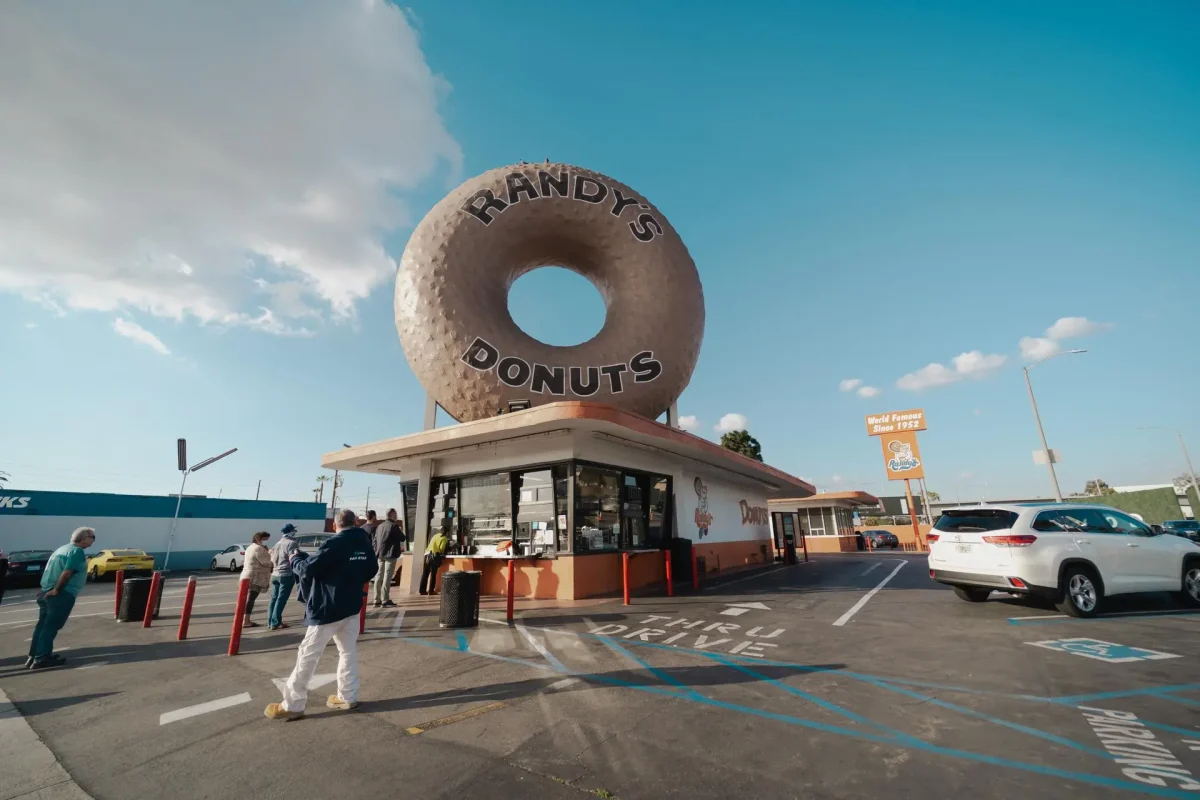
Going from one shop to a portfolio takes an agreement you understand and a partner whose system you can repeat. Randy’s has made donuts in Inglewood, California, since 1952, and our hub-and-spoke model is built for multi-unit investors.
Our 8-step process, outlined on our franchise site, runs from an initial inquiry through FDD review and Discovery Day to signing the franchise agreement. When you’re ready to request the FDD, talk with our franchise team.