When you weigh a franchise, focus on how the business actually makes money. That includes asking what happens when one part of the day goes quiet.
A franchise with multiple revenue streams answers that worry. It sells more than one thing, so a slow morning or a soft season does not stall the whole shop. This guide shows you why that matters and how to judge it.
Key Takeaways
- A franchise with multiple revenue streams earns from several products, channels, day parts, and order types. A slow window never stalls the shop.
- Diversification spreads risk and steadies sales across the week, and it lifts how much each customer spends per visit.
- Common food and beverage streams include in-store sales, coffee, breakfast, boxed dozens, catering, and online ordering with delivery.
- The Franchise Disclosure Document (FDD) is your main due-diligence tool. The FTC requires it to cover 23 specific items before you invest.
- Randy's Donuts pairs a premium coffee program with handcrafted donuts and hub-and-spoke growth, so it earns across the full day.
What Is a Franchise With Multiple Revenue Streams?
A franchise with multiple revenue streams earns income from several products, channels, day parts, or order types rather than one source. A revenue stream is simply one source of sales, such as coffee at the counter or a catering order for an office.
Picture a coffee shop that also serves breakfast, or a donut shop that adds catering for local events. Each added source keeps money coming in when another slows down.
Why Revenue Diversification Matters When Evaluating a Franchise
Diversification matters for a plain reason. When a shop leans on one product, a single bad season can wipe out its margin. Spread the income, and the business holds steadier. It also lifts the average ticket, because a customer who comes in for coffee often adds a donut.
If you are comparing models, review the types of coffee franchises and how each one earns.
How Multiple Revenue Streams Smooth Sales Across the Day
A daypart is a block of the day, such as the morning rush or the midafternoon lull. A single-product shop spikes once and then sits quiet for hours. A diversified menu earns across those blocks, with morning coffee and classic donuts, plus afternoon boxed orders and sweet treats.
Demand for eating out is large and worth planning around. The USDA Economic Research Service reports that "In 2025, 43.7 percent of total food expenditures were spent on food at home (FAH) and 56.3 percent on food at food service outlets (FAFH)." The same agency shows limited-service sales swing by season. Average daily inflation-adjusted sales were lowest in January at $1,277 million and peaked in May at $1,493 million.
Coffee widens the audience too. The 2026 National Coffee Data Trends report from the NCA and SCA found "36% of past-day specialty coffee drinkers having their coffee prepared away from home, compared to 23% of past-day traditional coffee drinkers."
Those figures cover U.S. adults. A shop with a strong beverage program, such as a food franchise with coffee, can serve that away-from-home demand.
Common Revenue Streams in a Food and Beverage Franchise
Consider the channels that give a food and beverage franchise more than one way to earn:
- In-store retail brings walk-in sales at the counter, serving as the daily base of the business.
- Coffee and beverages pull in repeat morning visits with hot and iced drinks.
- Breakfast food captures the early daypart alongside coffee.
- Boxed dozens serve homes and offices with larger takeaway orders.
- Catering and events supply big-format orders for meetings and celebrations.
- Online ordering and delivery bring digital sales through the app and third-party platforms.
- Limited-time products spark fresh interest with seasonal donuts.
Each channel adds a separate income source. As a result, the shop does not depend on one moment or one buyer.

How Randy's Donuts Builds Multiple Revenue Streams
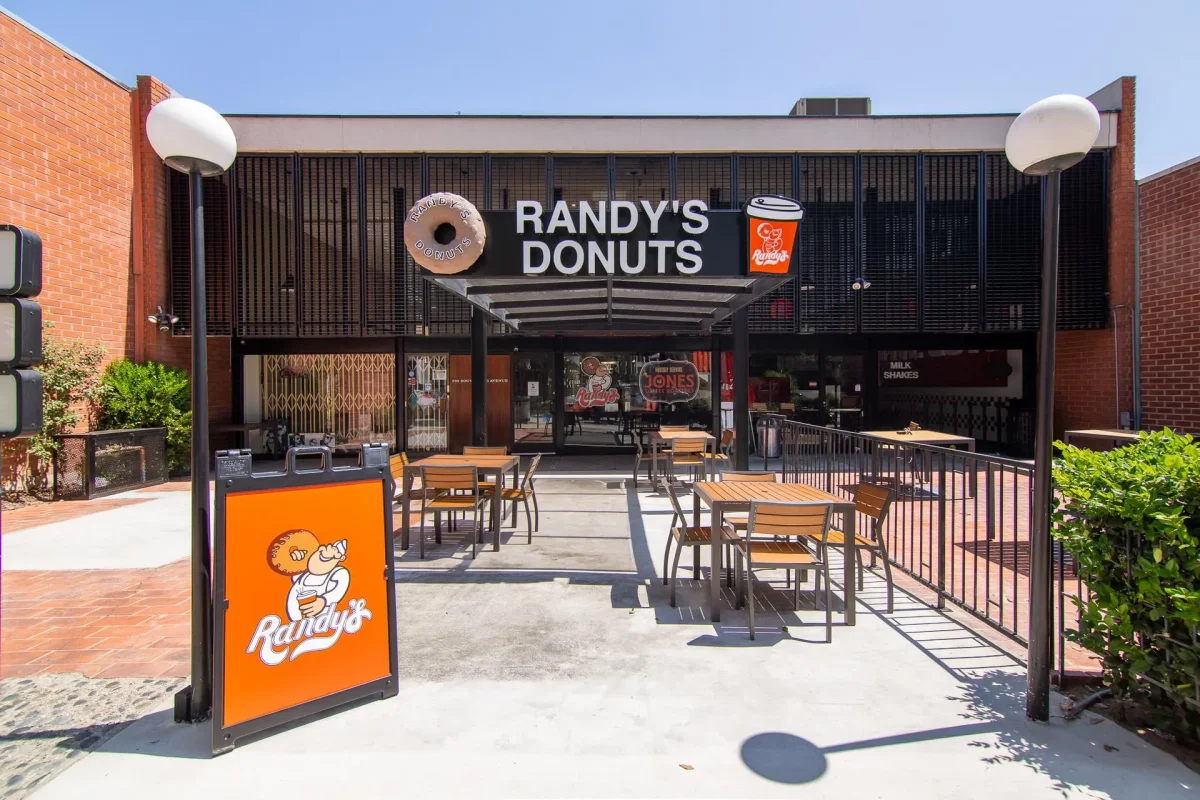
Randy's Donuts is a working example of this business model. It runs a dual-concept coffee and donut franchise where a premium coffee program sits next to handmade donuts. That pairing covers the morning rush and the treat runs later in the day.
Beyond the counter, Randy's earns through boxed dozens, catering for events, online orders, and limited-time donuts. Each one opens another way for a location to bring in sales. In addition, the brand's hub-and-spoke franchise opportunity is built for multi-unit growth, with a central hub supplying smaller spoke shops.
In addition to the standard dual-concept of coffee and donuts, Randy’s Donuts provides franchisees two additional revenue opportunities: catering and fundraising.
Randy’s Donuts catering allows customers to bulk order donuts for their event, business, or party. It’s an additional way for franchisees to be present in the neighborhood and build revenue beyond the in-store experience.
Fundraising cements the franchise’s place in the community. Schools, sports teams, non-profits, and arts organizations receive 15% of all online and in-store fundraiser sales. Randy’s Donuts franchisees receive the recognition from helping their neighbors. It’s a great partnership and an additional way to earn revenue.
What to Check in the FDD Before You Invest
Before you sign anything, read the Franchise Disclosure Document (FDD). The FDD shows how a franchise makes money and what it costs to run.
The government sets the rules here. Under the FTC Franchise Rule, "The Rule requires franchisors to provide all potential franchisees with a disclosure document containing 23 specific items of information about the offered franchise, its officers, and other franchisees." The amended Franchise Rule adds a timing requirement. You must receive the FDD at least 14 calendar days before you sign a binding agreement or make any payment.
Read the fee and investment items closely, and look for Item 19, where a franchisor may share financial performance figures.
Randy's own structure gives you a concrete example to verify in its FDD. The initial franchise fee is $35,000 for the first hub shop. The royalty is 5% of weekly gross sales.
The Brand Fund contribution is currently 1.5% of weekly gross sales, which may increase but must not exceed 4%. The estimated initial investment varies by location type, such as an in-line shop versus a drive-thru.
Frequently Asked Questions
What does a franchise with multiple revenue streams mean?
It means the business earns from more than one source, such as counter sales and catering orders. Income never rests on a single product or hour.
Why does revenue diversification lower risk?
When one product or daypart slows down, other streams keep sales coming in, so a single weak spot does not decide the whole month.
What is a daypart?
A daypart is a block of the day, like the morning coffee rush or the afternoon treat run. Each one is a chance to earn.
Where do I find a franchise's real numbers?
You find them in the Franchise Disclosure Document, especially Item 19, which the FTC requires the franchisor to share before you invest.
Does Randy's Donuts support multi-unit growth?
Yes. Its hub-and-spoke model uses a central hub to supply smaller spoke shops, which suits owners who want more than one location.
Build a Business That Works All Day Long
A franchise model that earns across the day gives you more ways to win and fewer ways to stall. That is the case for pairing coffee with donuts and building more than one location.
Ready to learn the steps? Start with our guide on how to start a donut shop. Then reach out to the Randy's Donuts franchise team to explore our dual-concept, hub-and-spoke opportunity and see whether it fits your goals.